Getting started in basketball can be exciting and challenging. To help beginners build a strong foundation, practicing essential drills is key. Dribble races encourage speed and ball handling through fun competitions with cones. Layup drills help players develop their scoring from both sides of the basket. Passing activities like “Monkey in the Middle” enhance teamwork and accuracy while introducing defensive elements. Shooting drills teach proper form by aiming for perfect shots without hitting the rim. Other important exercises include defense slides for footwork, rebounding techniques to learn boxing out, and conditioning drills to boost fitness levels. Each drill focuses on core skills necessary for success on the court!
1. Dribble Races: Improve Speed and Ball Handling
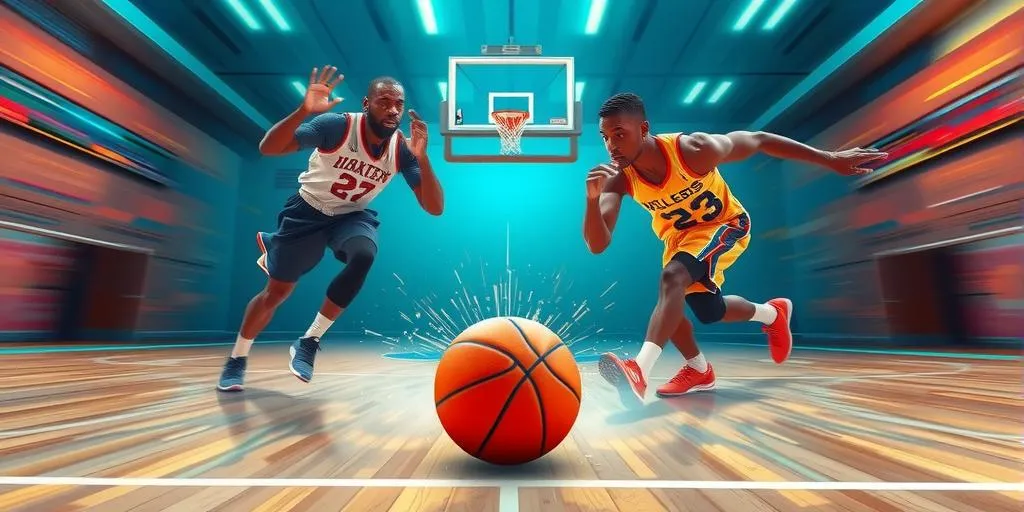
Dribble races are an exciting way for beginners to enhance their ball handling and speed. To set up this drill, create a course using cones spaced out in a straight line or zigzag pattern. Players start at the beginning of the course and race to the finish line while dribbling the basketball. It’s important to encourage them to use both their dominant and non-dominant hands during the race. This not only helps improve their ball control but also builds confidence in their ability to maneuver the ball under pressure. For added challenge, you can time the players or create team competitions, making it a fun and engaging way to practice essential skills.
2. Layup Drills: Mastering Left and Right Layups
Layup drills are crucial for beginners to develop their finishing skills around the basket. To effectively master both left and right layups, players should start by lining up on both sides of the hoop. One by one, they will take turns approaching the basket, alternating their layup hand with each attempt. For a right-handed layup, players should take off from their left foot, using their right hand to finish the shot off the backboard. Conversely, for a left-handed layup, the approach is the same, but they will take off from their right foot and finish with their left hand.
To enhance this skill, players can incorporate variations like using a defender or adding a dribble before the layup. This way, they can simulate game situations where they need to navigate around a defender. Coaches can also encourage players to focus on their footwork, ensuring they are balanced and in the right position before taking the shot. Practicing these drills consistently will build confidence and improve overall layup efficiency, essential for scoring in games.
3. Passing Drills: Accuracy and Teamwork Focus
Passing is a fundamental skill in basketball that fosters teamwork and enhances a player’s ability to communicate on the court. One effective drill for beginners is called “Monkey in the Middle.” In this drill, two players stand a few feet apart, passing the ball back and forth while a third player tries to intercept the passes. The offensive players must focus on making accurate passes to each other while also being aware of the defender’s movements. This drill not only improves passing accuracy but also teaches players to think strategically about how to protect the ball and work together. For example, players can practice different types of passes, like bounce passes and chest passes, to understand their effectiveness in various situations. Additionally, introducing a time limit can add pressure, encouraging quicker decision-making and sharper focus. This drill exemplifies how teamwork and communication are vital in basketball, as players learn to rely on one another to maintain possession and create scoring opportunities.
| Drill Name | Objective | Setup | Execution |
|---|---|---|---|
| Monkey in the Middle | Enhance passing accuracy and defensive skills | Two players pass the ball while one defender tries to intercept. | The offensive players must pass without getting intercepted, improving teamwork. |
4. Shooting Drills: Perfecting Your Form
Shooting drills are essential for beginners to develop proper shooting mechanics. To start, players should focus on their stance: feet shoulder-width apart, knees slightly bent, and weight balanced. A common drill is to shoot from various spots around the basket, ensuring that each shot is taken with the same form. For instance, players can begin shooting from just a few feet away, concentrating on making perfect shots that go straight through the net without touching the rim.
As they progress, they can move further out and incorporate different shooting angles. It’s also helpful to practice shooting off the dribble to simulate in-game scenarios. Coaches should emphasize the importance of follow-through, where the shooting hand finishes high, and the fingers point towards the basket. By consistently practicing these shooting drills, beginners can build confidence and accuracy, essential for game situations.
- Form Shooting: Focus on technique from close range.
- Spot Shooting: Shoot from various designated spots on the court.
- Free Throws: Develop consistency by shooting free throws regularly.
- Catch-and-Shoot: Practice shooting immediately after receiving the ball.
- Off-the-Dribble Shooting: Work on shooting while dribbling to create space.
- Shooting Under Pressure: Simulate game situations to improve focus and performance.
- Bank Shots: Learn to use the backboard for scoring.
5. Defense Slides: Enhancing Footwork Skills
Defense slides are a crucial drill for basketball beginners, focusing on improving defensive footwork. This drill helps players learn how to move quickly and effectively while staying low to the ground, which is essential for guarding opponents. To set up, players line up along a designated line and practice sliding laterally from side to side. It’s important to keep the knees bent and the body low, allowing for quick and agile movements.
An effective way to execute this drill is through the Z-Drill. Players will slide to one side, then back to the other, forming a ‘Z’ pattern. This not only helps with footwork but also conditions players to react quickly to an opponent’s movements. For added intensity, you can time the slides or incorporate a basketball to simulate real-game scenarios. By perfecting these slides, beginners will enhance their ability to stay in front of their opponents, making them more effective defenders on the court.
6. Ball-Handling Drills: Coordination with Tennis Balls
Ball-handling is crucial for any basketball player, especially beginners. One effective drill to enhance coordination and ball-handling skills is the tennis ball dribbling exercise. In this drill, players will dribble a basketball while simultaneously tossing a tennis ball into the air.
The objective is to keep the head up, which helps players develop awareness of their surroundings on the court. This drill not only improves hand-eye coordination but also forces players to focus on maintaining control of the basketball while managing the tennis ball.
To execute this drill, start by standing in a comfortable position. Begin dribbling the basketball with one hand and toss the tennis ball into the air with the same hand. As the tennis ball descends, catch it with the same hand and continue dribbling. Switch hands after a few repetitions to ensure balanced skill development.
For added challenge, increase the height of the toss or try to dribble faster. This drill can be done individually or in pairs, allowing for competition and improvement.
7. Rebounding Drills: Effective Boxing Out Techniques
Rebounding is a crucial part of basketball, and learning how to box out effectively can greatly enhance a player’s ability to grab rebounds. The boxing out drill involves pairing players, where one acts as the shooter and the other as the rebounder. When the shooter takes a shot, the rebounder must position themselves between the shooter and the basket, using their body to block the shooter from getting the ball. This technique is vital because it establishes a habit of using physical presence to secure rebounds.
To execute this drill, start by having the shooter take a shot from various angles around the basket. As the shooter releases the ball, the rebounder must quickly pivot and get into position, ideally using their lower body to create space. Encourage players to anticipate where the ball will land based on the angle of the shot, which helps them improve their timing and positioning.
For added challenge, introduce a competition aspect by timing how many rebounds each player can secure within a set time frame or by counting successful box-outs against a determined number of shots. This not only makes the drill engaging but also instills a competitive spirit, essential for game situations.
8. Footwork Drills: Passing and Pivoting Practice
Footwork is crucial in basketball, as it helps players maintain balance and positioning during plays. One effective drill is the Partner Pass and Pivot. In this drill, players partner up and start dribbling toward each other. As they approach, they make a pass after coming to a stop. Next, they practice pivoting on one foot before passing again. This helps improve their ability to change direction quickly while keeping control of the ball.
For example, when a player receives a pass while on the move, they can pivot to either create a shot opportunity or pass to a teammate. Emphasizing this skill helps players become more versatile on the court. Additionally, practicing footwork in this manner reinforces the importance of keeping their feet active and ready to respond to defensive pressure.
9. Scrimmage Drills: Game-Like Skill Application
scrimmage drills are crucial for beginners as they allow players to put their skills into practice in a realistic game setting. By playing small-sided games, like 3-on-3 half-court matches, players can learn to apply their dribbling, passing, and shooting techniques while also understanding the importance of teamwork and spacing on the court. During these scrimmages, coaches should encourage players to communicate and make quick decisions, simulating the fast-paced nature of an actual game. For example, if a player drives towards the basket, teammates should learn to create space and be ready for a pass, reinforcing the importance of positioning and movement. Moreover, scrimmages help players develop their defensive skills, as they must learn to guard their opponents while also anticipating plays. This practice not only builds confidence but also enhances game awareness, making scrimmage drills an essential part of any beginner’s training regimen.
10. Conditioning Drills: Building Endurance and Speed
Conditioning drills are crucial for basketball players, especially beginners, as they help build endurance and speed on the court. One effective drill is the suicide sprint, where players sprint to specific lines on the court and back. This drill is not only challenging but also simulates the quick bursts of speed required during a game. For example, players can set markers at the free-throw line, the half-court line, and the baseline, sprinting to each marker in succession. Another drill involves shuttle runs, where players sprint back and forth between two points, focusing on quick starts and stops. Incorporating these drills into practice sessions will enhance cardiovascular fitness and prepare players for the demands of a full game, ensuring they have the stamina to perform at their best.
Frequently Asked Questions
1. What are basketball drills and why should beginners do them?
Basketball drills are specific practice exercises aimed at improving skills like shooting, dribbling, and passing. Beginners should do them to build a strong foundation for playing basketball.
2. How often should beginners practice these drills?
Beginners should try to practice these drills at least three times a week to see improvement and build muscle memory.
3. Can I do these drills alone, or do I need a partner?
Most of these drills can be done alone, but some may benefit from having a partner, especially for shooting or passing drills.
4. What equipment do I need to do these drills?
You mainly need a basketball and access to a hoop. Some drills may require cones or markers, but they can also be replaced with everyday items.
5. Are these drills suitable for kids or just adults?
These drills are great for all ages! They can be adjusted in difficulty to suit kids or adults, making them perfect for anyone starting out.
TL;DR This blog post outlines 10 essential drills for basketball beginners to enhance their skills. Key drills include Dribble Races for speed and ball handling, Layup Drills for mastering left and right layups, Passing Drills to improve accuracy and teamwork, Shooting Drills for perfecting form, and Defense Slides for footwork enhancement. Additional drills focus on ball handling, rebounding, footwork, scrimmage scenarios, and conditioning to build endurance. These exercises are crucial for developing foundational basketball skills.